Virtual Reality Hardware: Headsets and Optics
Understanding the physical layer of spatial computing, from inside-out tracking arrays to next-generation micro-OLED displays.
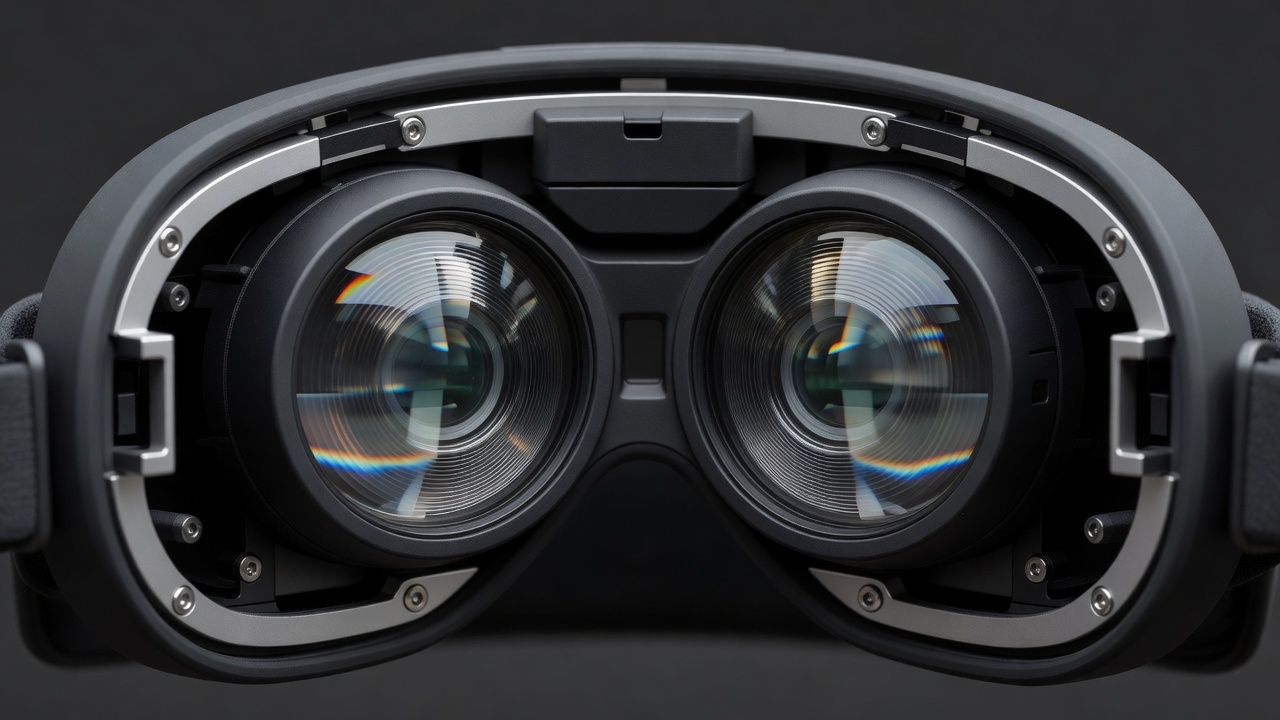
The Evolution of the HMD Form Factor
The head-mounted display (HMD) has undergone radical transformations over the past decade. Early consumer models were famously bulky, requiring complex setups involving external base stations, thick umbilical cables routing back to powerful desktop computers, and dedicated physical space. These constraints created significant friction for widespread adoption.
Today, the industry consensus has shifted heavily toward standalone architectures. By integrating mobile processors, onboard batteries, and sophisticated computer vision systems directly into the headset, manufacturers have severed the cord. This shift demands extraordinary engineering, balancing thermal management, weight distribution, and processing capabilities within an incredibly compact footprint.
Display Technologies: Chasing Visual Fidelity
One of the primary historical hurdles for VR hardware has been the "screen-door effect"—the visible gaps between pixels when a screen is placed mere centimeters from the eye. Overcoming this requires immense pixel density.
Modern premium headsets are transitioning from standard LCD panels to advanced Micro-OLED arrays. These displays offer profound contrast ratios, enabling true blacks that are vital for immersive deep-space or horror experiences. More importantly, they provide the pixel density required to make text readable and fine details sharp without the cognitive load associated with early low-resolution displays.
Coupled with these new panels are "pancake" lenses. Older Fresnel lenses, marked by their concentric ridges, were thick and prone to visual artifacts like "god rays." Pancake lenses fold the optical path multiple times, allowing the display to sit much closer to the lens. This innovation is largely responsible for the drastically slimmer profiles of modern headsets.
Tracking the User: Inside-Out vs. Outside-In
Understanding a user's position in 3D space with sub-millimeter accuracy is critical. Latency or inaccuracy in tracking directly leads to motion sickness. The industry broadly uses two methodologies for 6 Degrees of Freedom (6DoF) tracking.
- Outside-In Tracking: Relies on external infrared emitters or cameras placed around a room. While offering the highest precision and largest tracking volume, it is restrictive and difficult to set up.
- Inside-Out Tracking: Utilizes an array of cameras mounted directly on the headset. These cameras map the surrounding environment in real-time using SLAM (Simultaneous Localization and Mapping) algorithms. This method has become the industry standard due to its "plug-and-play" nature.
These onboard cameras are now doing double duty. Beyond tracking the headset and controllers, they are increasingly used for high-resolution color passthrough, enabling Mixed Reality (MR) experiences by seamlessly blending digital objects with the physical room.
The Role of Haptics and Peripherals
While visual and auditory systems have seen rapid advancement, tactile feedback remains a complex frontier. Standard VR controllers use rumble motors—effective for simulating the firing of a digital weapon or the strike of a virtual sword, but inadequate for simulating the texture or resistance of a physical object.
Enterprise and high-end consumer sectors are exploring advanced haptics. Force-feedback gloves can mechanically restrict finger movement to simulate gripping a solid object. Haptic vests map physical sensations across the torso, translating low-frequency audio and impact data into physical vibrations. Although currently expensive and niche, these peripherals point to the long-term goal of total sensory simulation.
The Tethered PCVR Ecosystem
Despite the dominance of standalone headsets, the PCVR ecosystem remains essential for rendering highly complex environments that mobile chips simply cannot handle. Applications in architectural visualization, heavy automotive engineering, and top-tier simulation gaming still require dedicated desktop GPUs.
The modern compromise is wireless streaming. Using protocols over high-speed networks (such as Wi-Fi 6E), standalone headsets can act as wireless thin-clients, receiving compressed, high-fidelity video streams from a local PC with minimal latency. This bridges the gap, offering the ergonomic freedom of a standalone device with the raw horsepower of a desktop workstation.