Enterprise VR: Training and Simulation
Moving beyond entertainment to revolutionize corporate training, architectural planning, and high-risk mechanical simulations.
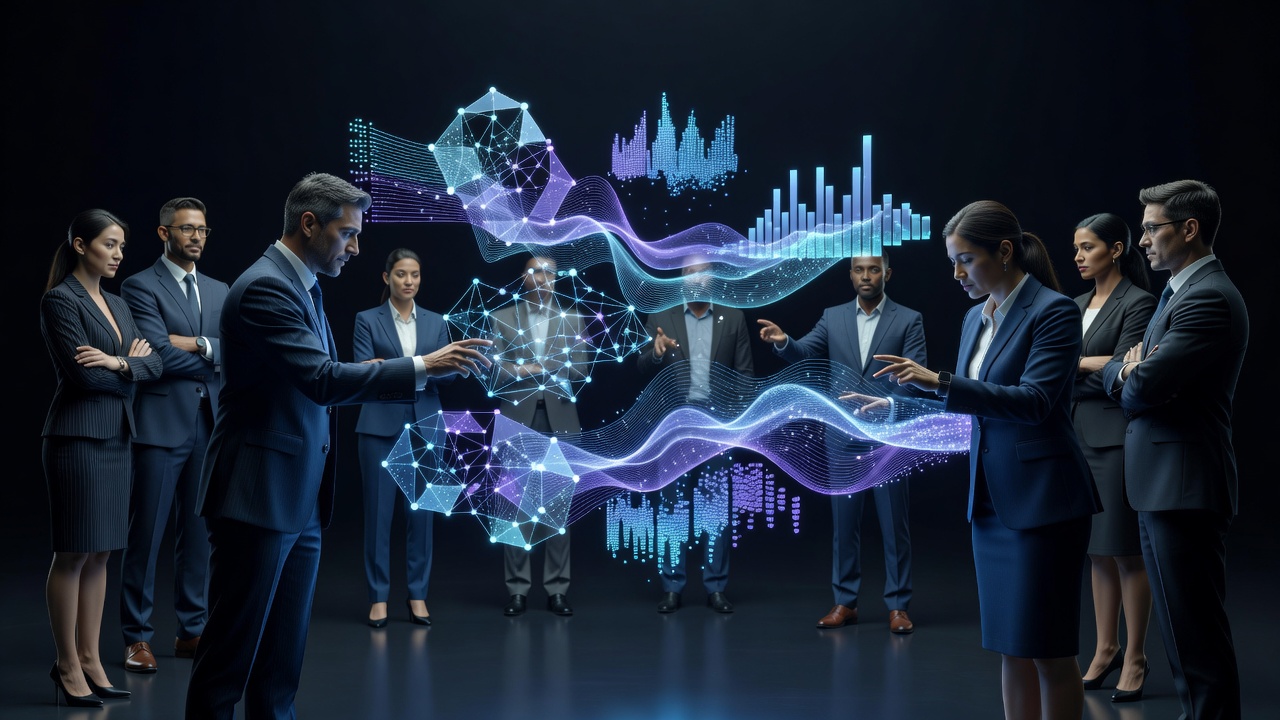
The Business Case for Virtual Reality
While the gaming industry generated the initial consumer push for virtual reality, the enterprise sector has quietly become the technology’s most robust testing ground. Businesses are deploying spatial computing not as a novelty, but as a calculated method to reduce costs, mitigate physical risks, and dramatically accelerate knowledge transfer among employees.
The core proposition of enterprise VR lies in its ability to simulate highly complex, dangerous, or expensive scenarios with zero real-world consequences. From aviation and heavy manufacturing to surgical preparation, spatial computing allows professionals to build muscle memory and procedural familiarity before ever stepping onto a factory floor or into an operating theater.
Revolutionizing Corporate and Procedural Training
Traditional training methodologies—textbooks, slide presentations, and instructional videos—are passive. They suffer from low retention rates, particularly when teaching spatial procedures or emergency protocols. Virtual reality transitions learning from a passive absorption of information to an active, experiential process.
When an employee is immersed in a 1:1 scale digital replica of their work environment, cognitive engagement spikes. Studies across various industries indicate that procedural tasks learned in VR are retained longer and executed with fewer errors in the real world. For logistics companies, this might mean simulating complex warehouse packing procedures. For utility companies, it involves practicing high-voltage line repair during simulated extreme weather conditions.
Crucially, VR training can be recorded, analyzed, and repeated infinitely without consuming physical resources or tying up expensive machinery.
High-Risk Scenarios and Medical Simulation
In sectors where mistakes carry catastrophic consequences, VR simulation is becoming indispensable. In aviation, while traditional hydraulic flight simulators remain the gold standard, VR provides a highly accessible supplementary tool for pilots to drill emergency checklist procedures and cockpit familiarization.
In healthcare, surgical simulation represents a massive leap forward. Complex, rare procedures can be modeled using a specific patient’s MRI and CT data. A surgical team can step into a shared virtual environment and physically walk through the steps of an operation on a digital twin of the patient's anatomy before the actual surgery takes place. This preparation reduces operative time and directly correlates with improved patient outcomes.
Digital Twins and Architectural Visualization
A "Digital Twin" is an exact, real-time virtual replica of a physical object, system, or facility. When coupled with VR, digital twins allow engineers and stakeholders to step inside data. An automotive design team distributed across three continents can gather in a virtual room, inspect the aerodynamics of a new chassis at full scale, and make design annotations directly on the 3D model.
In architecture and urban planning, VR has entirely replaced the traditional foam-board maquette. Clients can walk through unbuilt skyscrapers, experiencing the scale of a lobby or the specific sightlines from a 40th-floor window. This early-stage visualization prevents costly revisions during the construction phase by ensuring stakeholders fully comprehend the spatial dynamics before concrete is ever poured.
Soft Skills and Empathy Training
Beyond technical procedures, enterprise VR is proving highly effective in soft skills development. Corporations utilize interactive narrative simulations to train management in conflict resolution, diversity and inclusion, and empathetic leadership.
By placing a user in the digital shoes of an employee facing workplace discrimination or a customer dealing with a severe service failure, the immersion of VR bypasses intellectual understanding and triggers genuine emotional responses. This experiential empathy training is proving vastly more effective than traditional seminar-based approaches, pointing toward a future where VR shapes not just how we work, but how we interact with our colleagues.